Patricia Paiwonski
Stranger in a Strange LandPatricia Paiwonski is a tattooed carnival performer whose integrity and religious conviction outlast the roles that first make her visible: the “blow-off” attraction, the Fosterite convert, and finally a teacher and priestess in Mike’s Church of All Worlds. Her story turns spectacle into testimony. The images on her skin connect her to her late husband’s art and Reverend Foster’s faith, while the water-sharing rite with Mike and Jill makes her a trusted member of their community without requiring her to abandon her own beliefs.
Identity and the Carnival
At the carnival, Patricia’s act is advertised as an opportunity to find an untattooed patch of skin and win twenty dollars. The prize goes unclaimed not merely because Honey Bun, her fourteen-foot boa constrictor, circles her strategically, or because more than a dozen cobras occupy the tank around her platform. The claim is also literally sound: Patricia and her late husband, George, had a tattoo studio in San Pedro, and the work on her skin is complete from the neck down. She takes pride in being, in her view, the world’s most thoroughly tattooed woman, decorated by the artist she considers the world’s greatest.
Her carnival life does not make her an unscrupulous operator. Patricia associates with grifters and sinners, but regards her own earnings as honest. She carefully distinguishes between the photographs she sells to the public and special material restricted to customers who can establish professional credentials; she will refuse the higher-paying sale if a customer does not appear to qualify. This practical exactness sits beside, rather than contradicts, her faith: she can work within a sideshow’s commercial routines and still understand herself as a religious witness.
Patricia and George were converted by Reverend Foster. She retains her membership in the San Pedro congregation and attends a branch of the Church of the New Revelation wherever her travels take her. When she and George converted, three square feet of her skin remained undecorated. Before his death, George used that space to make a pictorial account of Foster’s life, from his infancy to his place among the archangels. Patricia regards the tattoo as sacred history, though local law sometimes requires her to cover it. In private church meetings, she can reveal the images when the local shepherd asks; she sees this as a chance to reach seekers, since those already saved need less persuading. Unable to preach, sing, or speak in tongues, she offers her own body as evidence of the faith.
Leaving the Show and Meeting Mike
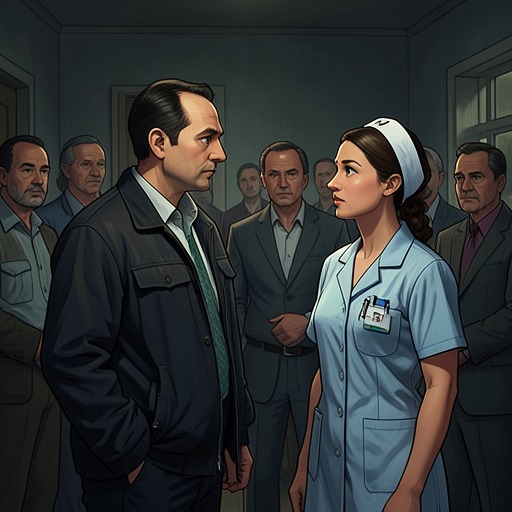
Patricia’s relationship with Mike and Jill begins amid a change of occupation. After they decide to leave the carnival, she comes backstage in a robe and learns that their act has been dropped. She is angry at the decision and considers taking over the show herself, since a strong closing attraction is difficult to replace. But she recognizes that Mike lacks showmanship and accepts that the decision is right. Her affection is personal as well as professional: she tells them they have been like her own children and invites them to visit her living quarters before the show moves on.
Later, when Patricia visits Mike and Jill, she is concerned that they are leaving the show and tries to comfort them. Jill explains that she and Mike need to improve their act, while Patricia’s response makes clear that their bond has already become familial. The visit also brings a difference of belief into the open. After Mike explains that he is the Man from Mars, Patricia accepts him as a man and agrees to treat him as one, while continuing to believe that his true nature and purpose are religious. She understands Foster as having been both genuinely human and, without knowing it, an archangel. Mike and Jill describe themselves as seekers rather than members of her church. Patricia does not make acceptance conditional on their conversion: she promises to help and says she will treat them as they ask to be treated.
Water-Brotherhood and the Two Kisses
Patricia’s welcome deepens through the Martian water-sharing ceremony. Mike sends a glass of water into the bathroom and fills it from the tap without getting up. Jill explains that sharing water signifies trust, enduring partnership, and a bond that cannot be broken; she and Mike also make clear that Patricia may decline without losing their friendship. Patricia considers the offer against her own religious convictions and accepts it deliberately. Jill drinks first and passes the glass to Mike; he drinks, addresses Patricia as his brother, and offers her the water of life. The rite makes her kin to them while preserving her freedom to remain a seeker rather than join the Church of the New Revelation.
Patricia’s Fosterite faith is not a private matter she can simply set aside in this new relationship. She explains that fully saved Fosterites are tattooed and shows the image over her heart: Foster’s holy kiss, worked by George into a larger design so it resembles part of the picture. She has never shown it to someone who does not bear the same mark. Now, trusting Mike and Jill as water siblings, she reveals it and says she hopes to tattoo their own marks someday. Her disclosure makes intimacy reciprocal: she shares a guarded church secret, and Mike answers with an act that joins her old faith to her new bond.
Mike kisses Patricia on the mouth and then the place where Foster’s kiss is tattooed. After choosing a matching spot on the other side, he kisses her there as well. The act leaves paired red marks in the shape of his lips. Patricia nearly faints, then steadies herself through her faith. Soon afterward she covers her tattooed body with high-necked, long-sleeved clothing and gloves. She leaves without turning back, but says that she will wait and that the parting is not a final goodbye. The change in her public appearance marks a departure from her carnival role, not a renunciation of the faith represented on her skin.
Teacher, Priestess, and Guide
Patricia later becomes part of the Church of All Worlds community and uses her standing among Fosterites to help others approach it. She is ordained, though she says that most of her work is teaching: beginner Martian classes and support for novice brothers. She works with Dawn, while Dawn and Jill serve as high priestesses, to show Fosterites that membership in the Church of All Worlds need not conflict with their existing faith. Patricia explains Foster’s kiss and the miraculous companion mark Mike gave her. To those who have witnessed Mike’s miracles, the marks can help make the work and discipline of entering a higher circle intelligible.
Her account to Ben Caxton combines encouragement with a clear description of the community’s gradual initiation. The Nest’s central room, the Innermost Temple, contains a pool where new brothers are received. Patricia offers Ben the chance to share water or simply swim, and accepts his refusal without pressing him. She describes the path into the community as one that requires learning and discipline, and recalls that she and Dawn help people advance. Mike alone can judge that someone is ready for an unusually early water bond; on occasion Dawn or Patricia may identify someone for special promotion and training, usually in consultation with him.
Patricia also tells Ben about Sam and Ruth, a couple whom Mike chose for water-sharing when they had only just entered the Third Circle. Their later progress—from learning Martian to entering the Nest—gives her a concrete example of how teaching, language, trust, and communal support fit together. She recounts Ruth’s initial fear of joining the shared ceremony and her eventual experience of entering the pool among the gathered community. Patricia’s assurance to Ben is rooted in that experience: he will learn, receive help, and be welcomed rather than expected to master everything alone.
Faith, Community, and Significance
Patricia is neither a simple convert from one faith to another nor merely an emblem of either church. She remains a committed Fosterite while becoming a trusted worker in the Church of All Worlds. The novel presents that dual affiliation through acts of disclosure and hospitality: she shows Mike and Jill a sacred tattoo, accepts their water, teaches newcomers, and explains how the two religious communities can coexist. Her faith is firm, but her response to difference is generous; Mike and Jill may remain seekers, and Ben may decline the pool for now.
The novel’s descriptions of the New Revelation place Patricia’s beliefs within a larger organization built around public revival, degrees of membership, and a more selective inner church. In contrast to the church’s elaborate divisions, her role is grounded in direct service: she teaches beginners, guides novices, and serves as a living witness. The Church of All Worlds likewise uses circles and rites to form a disciplined community, but Patricia’s presence connects its practices to people who already belong to another religious tradition. Her tattoos, first made for a carnival audience and then partly concealed by local rules, become a bridge between spectacle, conviction, and trust.
In a later conversation about persecution, Sam describes the Church of All Worlds as capable of closing and reopening under new names while preserving its committed Nest and keeping advanced pilgrims in reach. He recalls that Mike began with only three untrained priestesses-by-courtesy and, in little more than a year, built a solid community. Patricia’s work as an ordained teacher belongs to that growth: she helps carry the language and training beyond Mike’s own demonstrations, while her sustained Fosterite identity shows how the new community recruits through accommodation rather than demanding that every member erase an earlier allegiance.